
Glassine Paper vs Wax Paper: Which Is Right for Food Packaging?
If you run a bakery, candy shop, or food business, you’ve probably had to choose between glassine paper and wax paper at some point. Both look similar on a shelf, and both keep grease from soaking through. But they’re not the same material, and picking the wrong one can affect how your food looks, feels, and holds up. This guide breaks down the real differences so you can pick the right paper for your product.
What Is Glassine Paper?
Glassine paper is a smooth, glossy paper made from wood pulp. It gets its shine and see-through look from a process called super calendering, where the paper is pressed through heavy rollers again and again until the fibers pack tightly together. There’s no wax or plastic coating on it at all. If you want the full breakdown of how it’s made, we cover that in detail in our guide on what glassine paper is.
Because it has no coating, glassine paper is fully recyclable and breaks down naturally. It resists grease and moisture well, which is why bakeries use it to wrap cookies, donuts, and candy.
What Is Wax Paper?
Wax paper starts as regular paper, then gets coated with a thin layer of wax, usually paraffin or a soybean-based wax. That coating is what makes it moisture-resistant and slightly slippery to the touch.
The wax layer works well for keeping food fresh in the short term, but it comes with a tradeoff. Wax-coated paper takes much longer to break down than plain paper, and most recycling programs won’t accept it because the wax gums up the recycling process.
Key Differences Between Glassine Paper and Wax Paper
Heat Resistance
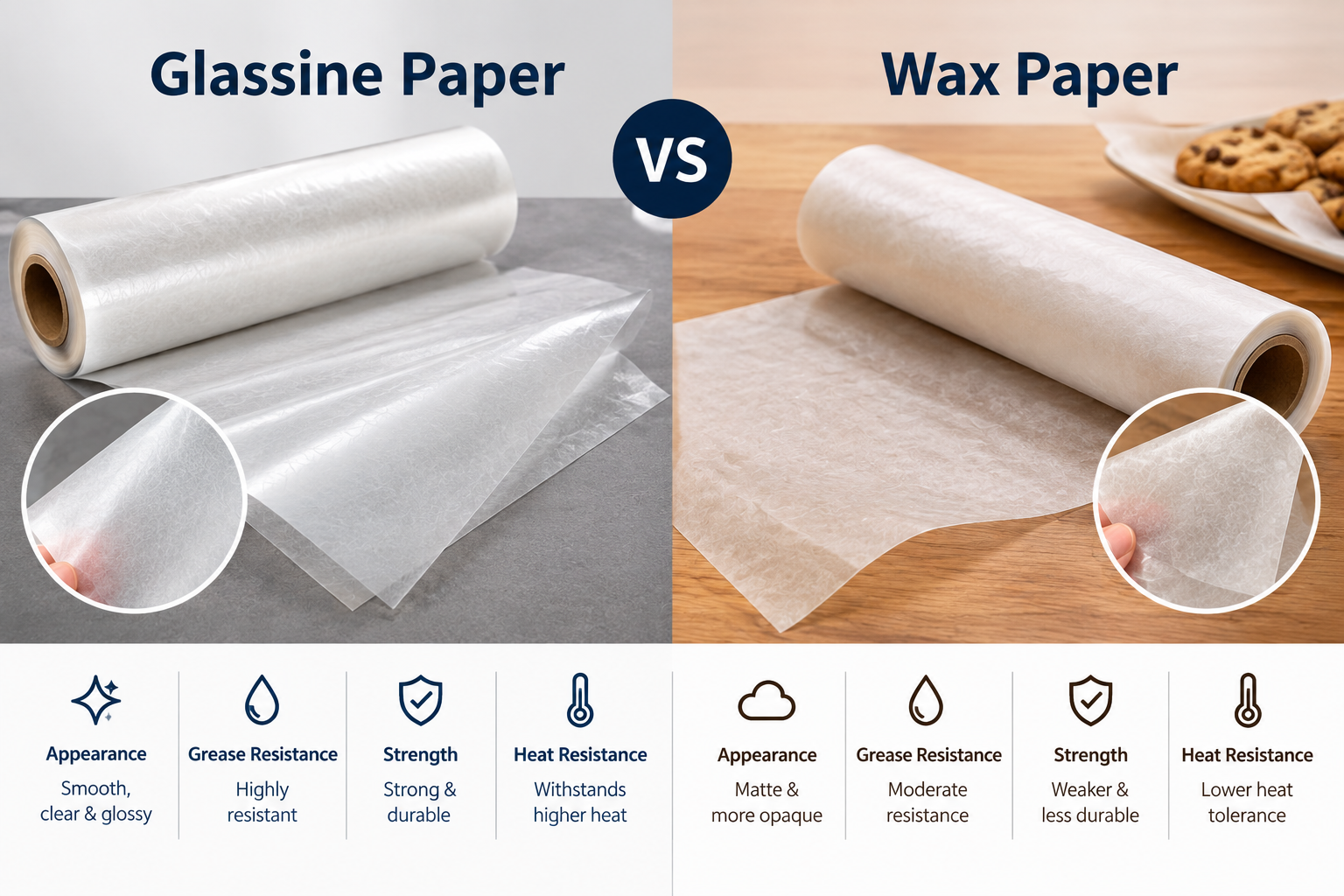
Neither paper is meant for the oven. Glassine paper can handle brief exposure to warmth, but high heat will damage it. Wax paper is worse in this area, since the wax coating can melt, smoke, or catch fire if it gets too hot. Keep both away from direct heat sources.
Grease and Moisture Resistance
Both papers block grease well, but they get there differently. Glassine resists grease naturally because its fibers are pressed so tightly together that oil can’t pass through. Wax paper blocks grease and moisture because of its wax layer, not the paper itself.
Recyclability and Sustainability
This is where glassine paper pulls ahead. Since it has no coating, it’s 100% recyclable and biodegradable, and it fits into standard curbside paper recycling. Wax paper is harder to recycle because the wax coating has to be separated from the paper fibers first, which most facilities can’t do.
Appearance and Printability
Glassine paper has a glossy, translucent look that gives packaging a higher-end feel. It shows off the product inside, which makes it popular for cookies, candy, and gift items. Wax paper is more opaque and has a slightly waxy texture, which some brands prefer for a simpler, rustic look.
Cost
Wax paper is generally the more budget-friendly option, especially for high-volume, short-term food wrapping. Glassine paper often costs a bit more, but many businesses find the upscale appearance and eco-friendly angle worth the difference.
Glassine Paper vs Wax Paper: Side-by-Side Comparison
Feature | Glassine Paper | Wax Paper |
Coating | None | Paraffin or soy wax |
Grease resistance | Yes, natural | Yes, from wax layer |
Recyclable | Yes | Difficult |
Biodegradable | Yes | Slow to break down |
Appearance | Glossy, translucent | Slightly opaque, waxy |
Best for | Bakery items, candy, gift packaging | Sandwiches, greasy or cold foods |
When to Choose Glassine Paper for Food Packaging
Glassine paper works best when you want your food to look good while it’s protected. It’s a strong pick for:
- Bakery bags for cookies, donuts, and pastries
- Wrapping individual candies or chocolates
- Packaging that needs a premium, see-through finish
- Businesses that want recyclable, plastic-free packaging
When to Choose Wax Paper for Food Packaging
Wax paper still has its place, especially for:
- Wrapping sandwiches, subs, and tacos
- Lining trays or baskets for greasy foods
- Short-term storage where cost matters more than sustainability
- Cold food items that don’t need a glossy finish
How Each Paper Holds Up in Storage
Storage conditions affect both papers, but in different ways. Glassine paper should be kept flat and away from high humidity, since too much moisture can cause the sheets to curl. It has a long shelf life when stored properly and doesn’t degrade quickly on its own.
Wax paper holds up fine in normal room conditions, but heat is its enemy. Leaving it near a warm oven, a sunny window, or a hot delivery van can soften the wax coating and make the sheets stick together. For food businesses shipping products in warmer climates, this is worth keeping in mind when choosing between the two.
Frequently Asked Questions
Can glassine paper and wax paper both go in the oven? No. Neither one is oven-safe. Wax paper is especially risky under high heat because the wax coating can melt or smoke.
Which is better for the environment, glassine paper or wax paper? Glassine paper is the better choice for sustainability. It has no coating, so it’s fully recyclable and biodegradable, while wax paper is difficult to recycle because of its wax layer.
Is glassine paper more expensive than wax paper? Usually, yes, glassine paper costs a little more. Many food businesses accept the higher price because of its upscale look and eco-friendly properties.
Final Thoughts: Which One Should You Choose?
There’s no single right answer here, it depends on what you’re packaging. If you want food to look attractive on a shelf and you care about recyclability, glassine paper is the stronger choice. If you’re wrapping greasy sandwiches or need a low-cost option for high-volume packaging, wax paper still gets the job done.
If you’re sourcing glassine paper or other specialty paper film for your food packaging line, manufacturers like ZEXN Paper offer options built for exactly this kind of use. You can see their full range on the Paper Film Series page.
Type your paragraph here